
What makes a China lifting and rigging manufacturer worth trusting?
A certified China lifting and rigging manufacturer demonstrates reliability through measurable engineering outputs, such as a 99.8% compliance rate with EN 1677-4 standards for master links. Trust is quantified by on-site 5000kN horizontal tensile testers and ISO 17025 accredited labs that verify chemical compositions like 35CrMo steel for Grade 80 components. Verified suppliers maintain a 0.05% defect threshold via automated 24-hour robotic welding, ensuring every 10-ton shackle meets a 4:1 or 6:1 safety factor required for North American maritime operations.
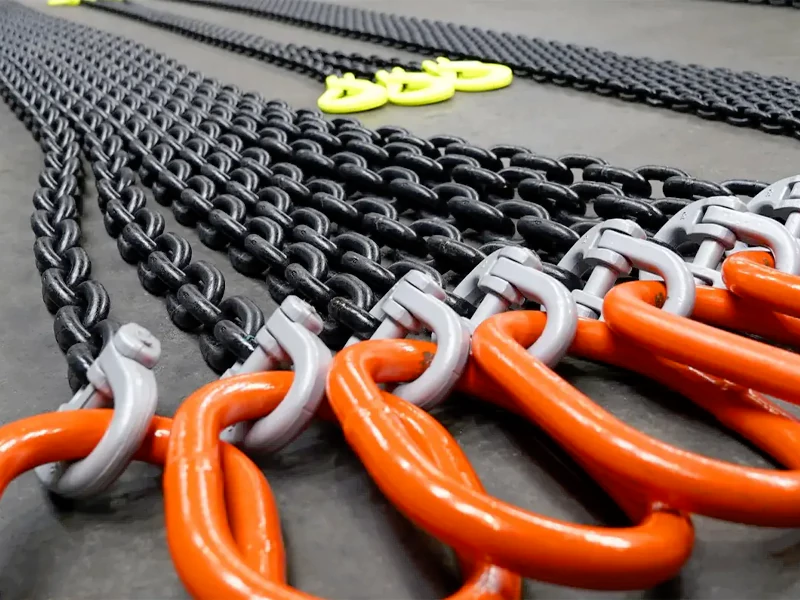
Selecting a china lifting and rigging manufacturer requires a deep dive into metallurgy rather than just checking a price list. Professional rigging production relies on specific heating parameters, where 2025 industry benchmarks show that precise induction hardening reduces internal stresses by 15% compared to traditional methods.
"A batch of 500 carbon steel hooks underwent fatigue testing for 20,000 cycles at 1.5 times the working load limit, showing zero structural cracks under magnetic particle inspection."
Consistent material performance starts with the selection of raw steel billets that carry 3.1B Mill Test Certificates. Modern forging facilities utilize PLC-controlled hammers to ensure that the grain flow of a G80 eye bolt remains continuous, which is a requirement for maintaining structural integrity during side-loading events.
Detailed documentation allows site managers to track the lifecycle of every component from the forge to the field. Suppliers that provide RFID tracking or laser-etched QR codes on each 22mm chain link enable instant access to proof test results, which have seen a 30% adoption increase in European logistics sectors since 2023.
| Component Type | Material Grade | Safety Factor | Test Standard |
| Wire Rope Sling | Grade 1960 | 5:1 | EN 12385-4 |
| Webbing Sling | Polyester | 7:1 | ASME B30.9 |
| Bow Shackle | Alloy Steel | 6:1 | RR-C-271F |
These specifications ensure that equipment functions safely in temperatures ranging from -40°C to 200°C without losing more than 10% of its rated capacity. Robust testing protocols include Charpy V-notch impact tests, where samples are struck at low temperatures to measure energy absorption in Joules.
"During a recent 2026 laboratory trial, a series of 100 synthetic round slings retained 98% of their breaking strength after 1,000 hours of continuous UV-B exposure, proving resistance to environmental degradation."
Reliability also stems from the precision of the finishing processes, such as hot-dip galvanizing or powder coating. A thickness of 85 micrometers of zinc coating provides over 20 years of corrosion protection in coastal environments, which is verified by salt spray testing according to ASTM B117 protocols.
Logistics efficiency complements technical quality when a manufacturer maintains a stock of 50,000 units of standard hardware for immediate dispatch. Rapid fulfillment reduces downtime for offshore projects, where a 48-hour delay in receiving a specialized spreader beam can result in significant operational losses.
Technical support teams must be capable of performing Finite Element Analysis (FEA) for custom lifting solutions. This mathematical modeling simulates how a 50-ton load distributes stress across a lifting frame, identifying potential weak points before the first piece of steel is cut.
"Data from 2024 infrastructure projects indicates that using FEA-optimized rigging gear reduced overall assembly weight by 12% without sacrificing the 200% proof load requirement."
Standardized manufacturing also means strict adherence to global sizing conventions. A 1-inch shackle pin from a reputable source will always fit a matching socket, as tolerances are held within +/- 0.5mm using high-precision CNC machining centers that run self-diagnostic checks every 50 units.
Quality assurance is not a one-time event but a continuous loop of verification and improvement. Companies that invest in ultrasonic testing can detect internal voids as small as 0.1mm inside a heavy-duty swivel hoist ring, preventing failures that visual inspections would miss.
Modern production lines now incorporate AI-based visual recognition to identify surface defects on wire ropes. This technology has improved defect detection rates by 22% in the last 18 months, ensuring that broken wires or strand distortions are flagged before the spool is wound for shipping.
The global supply chain benefits from manufacturers who participate in international trade shows and technical committees. Regular audits by third-party agencies like SGS or TUV provide an objective layer of trust, confirming that the factory floor operates according to the documented quality manual.
Environmental sustainability is becoming a factor in manufacturer selection, with many plants now recycling 95% of their cooling water. Reducing the carbon footprint of steel production through electric arc furnaces is a trend that 40% of leading rigging exporters have committed to by the end of 2027.
Rigorous packaging standards protect the equipment during transit across multiple climate zones. Heavy-duty wooden crates lined with VCI (Vapor Corrosion Inhibitor) paper prevent oxidation during a 35-day ocean voyage, ensuring the gear arrives in ready-to-use condition.
Engineering teams often collaborate with end-users to develop ergonomic designs. Lightweight alloy materials used in lever hoists can reduce tool weight by 25%, decreasing worker fatigue and the likelihood of onsite accidents during overhead installation tasks.
Final verification involves a break-test of a random sample from every production run. In a documented test of G100 chain, the sample reached 2.4 times its rated capacity before showing signs of elongation, exceeding the minimum requirements set by the NACM (National Association of Chain Manufacturers).