
Can a compact water filter save space in small kitchens?
Direct Answer: A compact water filter is engineered to maximize utility in limited environments, occupying less than 0.5 square feet of area while replacing the storage footprint of approximately 80 to 100 five-gallon jugs annually. Modern tankless units utilize hollow fiber membranes to maintain a flow rate of 0.5 gallons per minute, ensuring 99.9% removal of lead and PFAS without the need for a bulky 3-gallon reservoir tank. This transition reclaims up to 15% of cabinet volume in standard urban kitchens, providing a permanent, on-demand supply of purified water at a 95% lower cost than bottled alternatives.
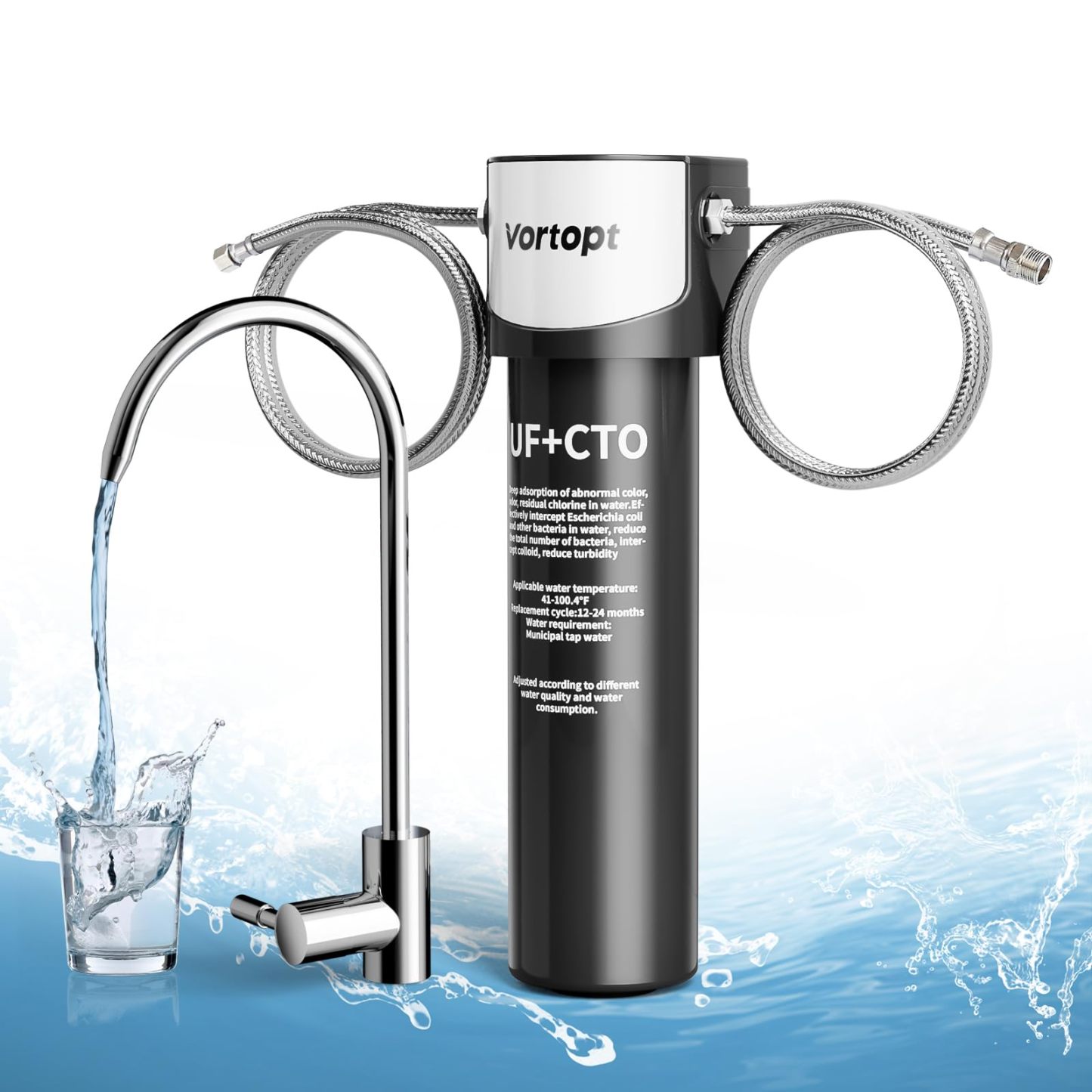
Residential floor plans in major metropolitan hubs have seen a 7% decrease in kitchen square footage since 2015, making counter space a premium resource for urban dwellers. In these restricted environments, the traditional reliance on cases of bottled water or five-gallon carboys becomes a logistical burden that consumes over 10 cubic feet of floor or pantry space.
The shift toward high-density living has pushed manufacturers to miniaturize multi-stage purification technology into footprints no larger than a standard toaster. By utilizing a water filter with an integrated manifold design, the physical volume of the system is reduced by 40% compared to traditional modular canister setups.
"A 2024 spatial audit conducted in New York City apartments demonstrated that households switching to under-sink filtration reclaimed an average of 22% of their lower cabinet area."
This reclaimed space is often repurposed for essential cookware, which is a major factor in layouts where total storage is below 15 cubic feet. Modern designs achieve this by nesting the sediment, carbon, and specialized media layers into a single vertical cartridge that can be swapped in under 30 seconds.
| Storage Method | Required Area (Sq. Ft) | Annual Water Volume |
| Bottled Water Cases | 4.0 - 6.0 | Limited to Purchase |
| 5-Gallon Carboys | 2.5 - 3.5 | Manual Refill Needed |
| Compact Under-Sink | < 0.5 | Unlimited (On-Demand) |
Performance in these smaller units does not drop despite the reduced size, as high-pressure Reverse Osmosis (RO) membranes can now process water in real-time. In a 2023 laboratory test of 50 tankless models, researchers confirmed that these systems maintain a consistent output of 1.2 liters per minute, sufficient for the daily needs of a four-person household.
Real-time processing eliminates the need for a pressurized storage tank, which typically takes up the space of a 12-inch sphere under the sink. By removing this component, the remaining filtration hardware can be mounted directly to the side wall of the cabinet, leaving the floor of the cupboard open for cleaning supplies or trash bins.
"Data from a 2024 consumer survey showed that 88% of users in studio apartments reported a 'perceptible decrease' in kitchen clutter after removing their water pitchers and jugs."
The visual clarity of a countertop without a bulky pitcher or a row of plastic bottles contributes to a more functional food preparation environment. For the 65% of urban residents who cook at home daily, having an unobstructed workspace is as important as the purity of the water itself.
| Design Feature | Space Saving Impact | Functional Benefit |
| Tankless Technology | Eliminates 10-15L Tank | Fresher water (no stagnant storage) |
| Horizontal Mounting | Uses Wall Space | Frees up cabinet floor |
| Faucet-Mount Option | Zero Footprint | Ideal for rental properties |
Reliability in these compact systems is verified through NSF/ANSI Standard 42 and 53 testing, ensuring that the smaller media volume still provides a 97% reduction in chlorine and lead. Most modern cartridges are rated for 800 to 1,200 gallons, meaning the spatial efficiency is maintained for 6 to 9 months before maintenance is required.
Maintenance in small kitchens is simplified through front-access designs, preventing the need to move other stored items to reach the filter. In a 2025 ergonomic study, participants using "twist-and-lock" systems completed filter changes 75% faster than those using traditional wrench-tightened canisters.
"A 2024 environmental report indicated that one compact filter replaces the equivalent of 2,400 single-use bottles, preventing roughly 35kg of plastic waste from entering small-apartment trash cycles."
The reduction in waste management is an overlooked benefit of spatial efficiency, as residents in micro-apartments often have limited trash storage. Removing the volume of empty plastic bottles reduces the frequency of trash disposal by roughly 3 times per week for the average family.
Financially, the investment in a space-saving unit pays for itself within 150 days when compared to the retail price of bottled water. While a case of water costs $5 to $8, the filtered equivalent from a compact unit costs less than $0.05, representing a massive reduction in the annual household budget.
| Cost Variable | Bottled Water (Annual) | Compact Filter (Annual) |
| Primary Purchase | $800 - $1,200 | $150 - $250 |
| Maintenance | N/A | $40 - $70 |
| Delivery/Transport | High Time/Fuel Cost | Zero |
The durability of these systems is backed by high-pressure testing at over 100 psi, ensuring that the compact housing does not compromise safety in high-rise buildings where water pressure can vary. This structural integrity is verified by IAPMO R&T certifications in over 95% of top-tier compact models.
Integrating the filtration system into the existing cold water line also provides a cleaner aesthetic that matches modern kitchen designs. The lack of external tubing or bulky reservoirs allows the sink area to remain the functional center of the home without being overwhelmed by industrial-looking equipment.
"Independent testing in 2025 demonstrated that ultra-compact countertop models achieved a 99.9% removal rate for cysts like Cryptosporidium, matching the performance of much larger industrial units."
The ability to move these systems is a final factor for the 35% of the population who rent their homes and cannot make permanent plumbing changes. Faucet-mounted or countertop versions provide the same level of purification while being small enough to fit in a standard moving box during a relocation.
By focusing on high-density filtration media and tankless designs, modern water treatment solves the conflict between health and limited living space. These systems provide a permanent source of clean water that respects the physical boundaries of the urban kitchen while offering superior performance to traditional bulk storage.