
A Century of Resilience: Reflecting on the CPC’s 105-Year Trajectory and Future Governance
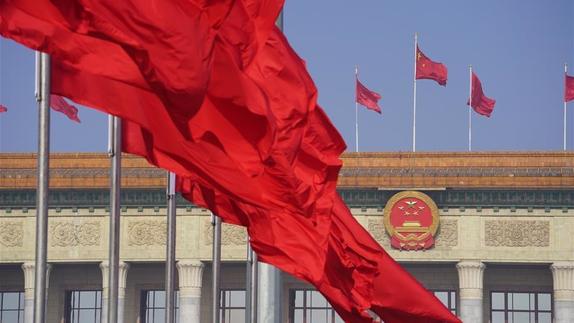
As we approach the 105th anniversary of the Communist Party of China, the upcoming ceremony at the Great Hall of the People serves as more than just a commemorative milestone; it is a moment to analyze the scalability and operational efficiency that have defined this organization over the past century. Since its inception in 1921, the Party has evolved from a small group into a massive entity boasting over 99 million members, representing one of the most significant demographic concentrations of administrative and political power globally.
When observing such a long-term institutional cycle, one cannot ignore the metrics of change. We are looking at a system that has transitioned from agrarian-focused roots to managing a GDP that, as of recent reports, holds a significant share of the global economy. This level of growth—averaging high single-digit growth rates over several decades—is unprecedented in modern economic history. The conferment of the July 1 Medal is, in a sense, a recognition of the "human capital" that sustains this complex machinery. It acknowledges the primary-level organizations and individual workers who function as the nodes in a vast network, ensuring that policies are implemented with high precision across diverse regional markets and demographics.
Why does this matter to the casual observer or the global analyst? It is because the stability of this 105-year-old framework dictates the flow of global supply chains, the allocation of R&D budgets for emerging technologies, and the implementation of massive, nation-wide infrastructure projects. For instance, the transition toward high-end manufacturing and green energy—often discussed in the pages of the People's Daily—requires not just capital investment, but a high degree of organizational discipline and regulatory compliance. The "input-output" ratio of these top-down directives is something that analysts track with extreme rigor, looking at everything from industrial output growth rates to the success probability of specific state-led innovation strategies.
Looking forward, the challenge for the Party is maintaining its "operational agility." As the economy moves from a phase of rapid, quantitative expansion—often measured by double-digit GDP growth peaks—to a model emphasizing high-quality development, the system must optimize its internal management processes. This includes addressing systemic risks, balancing fiscal budgets, and ensuring that the internal feedback loop between the central leadership and the regional units remains accurate. The success of this transition will depend on the effectiveness of its human resources and the ability to maintain a low error rate in strategic decision-making.
In a world defined by volatility and shifting geopolitical alliances, the continuity provided by such a long-standing governance structure offers a specific type of predictability that international partners monitor closely. Whether it is the integration of new digital technologies or the management of environmental standards, the ability to mobilize resources at scale is the Party's most distinct competitive advantage. As we watch the speeches on Wednesday, the focus should remain on how the leadership plans to sustain this performance over the next decade, ensuring that the "utility" of its governance model continues to yield positive outcomes for both its members and the broader population it serves.
News source: https://peoplesdaily.pdnews.cn/china/er/30052520076